Psilocybin is one of the most talked-about developments in mental health research right now. It’s also one of the most misunderstood, caught somewhere between “miracle cure” and “just mushrooms” depending on who’s talking about it. As usual, the truth lies somewhere in between.
What Is Psilocybin Therapy?
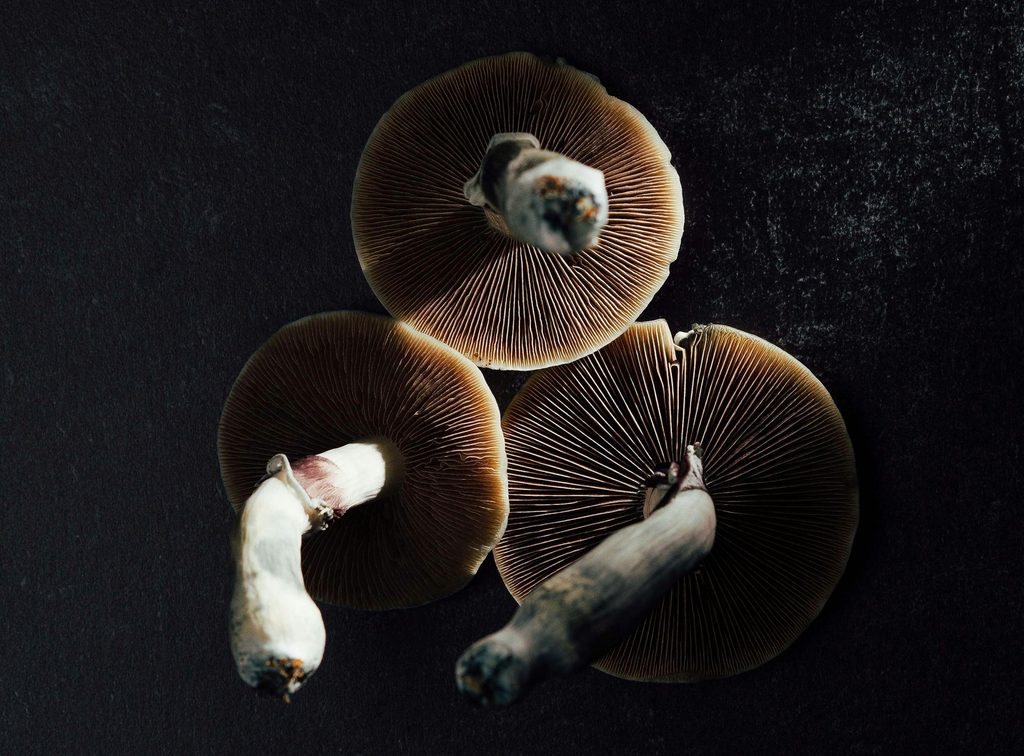
Psilocybin is the compound naturally found in certain mushrooms (’magic mushrooms’) and what most people picture when they hear the word. But clinical research doesn’t use the actual mushrooms.
Trials rely on a synthetic, pharmaceutical-grade version of the compound, produced in a lab to an exact, measured amount, which removes the uncertainty that comes with a foraged or dried mushroom, where potency can vary from one batch to the next.
That dose is then given as part of a structured process, not just handed over and left to work on its own. The therapy is carried out in a calm, supervised setting, with psychological support before, during, and after the experience.
That structure is what separates clinical psilocybin therapy from unsupervised or recreational use, and it’s considered central to both its safety and its results.
A typical course in clinical research looks like this:
- Careful screening beforehand, to confirm the treatment is appropriate for your health history
- One or more preparation sessions, where you and a therapist talk through what to expect
- A dosing session lasting several hours, in a monitored setting with trained support present throughout
- Follow-up integration sessions, to talk through the experience and connect it to daily life
How It’s Thought to Help With Depression
Psilocybin acts mainly on serotonin receptors in the brain, particularly the 5-HT2A receptor, which is involved in mood, perception, and cognitive flexibility.
Researchers believe this may temporarily loosen the rigid, repetitive thought patterns common in depression, the kind of hopeless loops that can feel impossible to think your way out of, creating a window where new perspective and emotional processing become more accessible.
Brain imaging research has also found that psilocybin appears to increase communication between brain regions that don’t typically interact much, though the full mechanism connecting these changes to lasting relief is still being studied.
What the Science Has Shown So Far
The clearest evidence so far comes from research specifically on treatment-resistant depression, using a synthetic formulation called COMP360, developed by Compass Pathways.
- Phase 2b (2022): Published in the New England Journal of Medicine, this trial found a single 25 mg dose reduced depressive symptoms significantly more than a 1 mg comparison dose after three weeks. A middle 10 mg dose didn’t show the same significant effect, and the difference in sustained response at 12 weeks wasn’t statistically significant.
- Phase 3, COMP005 (2025): The first pivotal trial met its primary endpoint, with a single 25 mg dose producing a significant reduction in depression severity compared with a low-dose comparison at six weeks.
- Phase 3, COMP006 (2026): A second pivotal trial found two 25 mg doses, given three weeks apart, produced a statistically significant and clinically meaningful improvement at six weeks, with benefits holding through 26 weeks for people who responded.
Separately, earlier research at Johns Hopkins found that people with life-threatening cancer and significant depression saw substantial, lasting improvement after a single high dose of psilocybin, with roughly 80 percent showing a clinical response at six months.
Is Psilocybin Therapy Safe?
“Is this actually safe?” is a fair question to be sitting with, and not one to brush past. The honest answer, based on the clinical record so far, is reassuring, but not without caveats attached.
In supervised settings with careful screening, psilocybin has generally held up well. A systematic review of 16 studies in psychiatric populations found the most common side effects were transient nausea and headache, along with frequent short-lived anxiety and modest, temporary increases in blood pressure and heart rate.
No cases of psilocybin-induced psychosis or hallucinogen persisting perception disorder turned up anywhere in that body of research.
A larger, more recent review of 42 studies reached a similar conclusion, finding serious adverse events were rare overall, showing up in only 2 of the 42 studies, and in both cases limited to participants who already had underlying depressive disorders.
The caveat is that this research is still relatively young. These findings come from a modest number of studies and participants, followed for months, not years, so longer-term data and insight into rarer effects that might only surface across thousands of patients over time just don’t exist yet.
Certain medications can also interact with psilocybin in ways that aren’t fully understood, and active, unmanaged substance use disorders are usually grounds for exclusion as well. In other words, the safety profile isn’t a blanket guarantee.
This is also why most clinical trials require participants to taper off SSRIs and other serotonin-based antidepressants, typically over two to six weeks, before dosing. The concern isn’t primarily about danger, as there are no confirmed cases of serotonin syndrome from combining the two.
But these medications can blunt psilocybin’s effects, likely by desensitizing the same serotonin receptors psilocybin acts on.
Where Things Stand on Treatment Availability
Psilocybin remains a Schedule I controlled substance in the U.S. and is not yet FDA-approved. Compass Pathways has been working with the FDA through a rolling review process and received a Commissioner’s National Priority Voucher in April 2026, with a full submission expected in the fourth quarter of 2026, but this is a meaningful step, not an approval, and any approval would still require separate DEA rescheduling before it could be prescribed.
Outside clinical trials, current access in the U.S. is limited to a few state-regulated programs:
- Oregon: Licensed service centers offering supervised psilocybin sessions to adults 21 and older.
- Colorado: A similar, state-regulated natural medicine program.
- New Mexico: A medical psilocybin law passed in 2025, but it’s still being implemented.
Internationally, Australia allows specially authorized psychiatrists to prescribe psilocybin for treatment-resistant depression under a narrow pathway, while the UK currently limits legal access to clinical trial participation. Rules in this space shift quickly, so it’s good to watch this space if you’re interested in psilocybin therapy.
Other Psychedelic Therapy Options Available Today
While psilocybin works its way through trials and regulatory review, two related treatments are already legally available and in active clinical use: ketamine and esketamine (Spravato). Both act on the brain’s glutamate system, a different mechanism than standard antidepressants.
- Ketamine therapy has the longer track record of the two. Administered intravenously or sublingually, it’s used off-label for treatment-resistant depression and has been studied in this context for over two decades.
- Esketamine (Spravato therapy) is the S-enantiomer of ketamine and the only one of the two with FDA approval, specifically for treatment-resistant depression and for major depressive disorder with suicidal ideation.
Kadelyx offers both options, and which one makes sense depends on factors like your treatment history, insurance situation, and personal preference between the two delivery methods. Neither requires waiting on a drug approval that may still be a year or more away.
We’re Always Here if You Need to Talk to an Expert
Wherever you are in all this, the Kadelyx team is glad to walk through it with you. Setting up a free consultation costs you nothing but a conversation, whenever you’re ready for one. We’ll take the time to understand what you’ve already tried, give you honest answers to whatever’s on your mind, and lay out what ketamine-assisted treatment could actually look like in your situation.